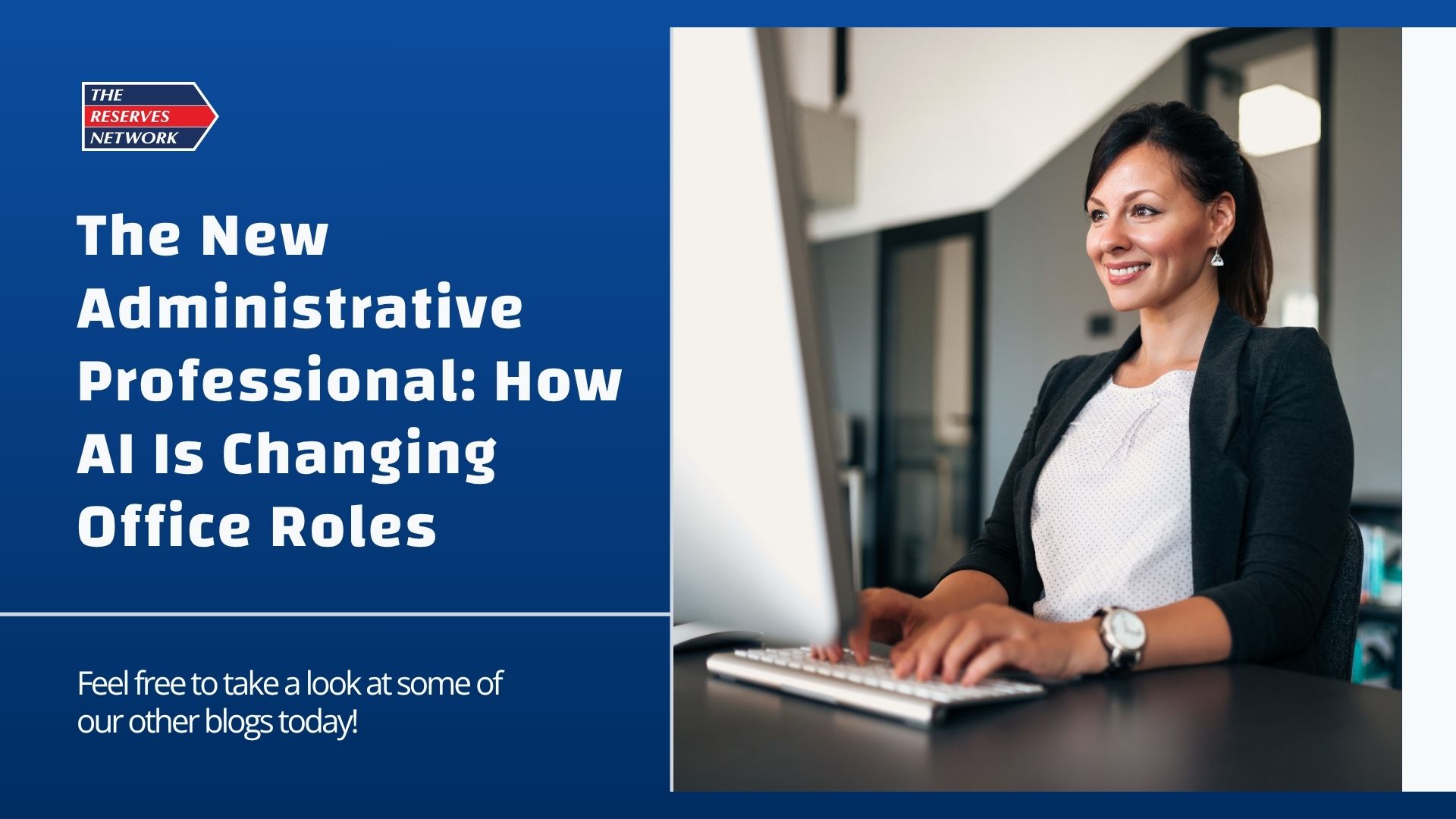
The New Administrative Professional: How AI Is Changing Office Roles

Over the past year, I’ve had a lot of conversations with hiring managers about AI.
Some are excited about it. Some are skeptical. And almost everyone is wondering the same thing: “How is this going to impact my team?”
When it comes to administrative and office support roles, the answer is becoming clearer. AI isn’t replacing administrative professionals. It’s changing what makes them valuable.
Not long ago, employers were primarily looking for people who could manage calendars, schedule meetings, handle paperwork, and keep things organized. Those responsibilities still matter, but technology is now handling some of those tasks faster than ever before.
The administrative professionals who stand out today bring something different to the table: judgment, communication skills, adaptability, and the ability to solve problems.
The Work Is Changing
Think about some of the tasks that used to take up a large portion of an administrative professional’s day.
- Scheduling meetings
- Drafting routine emails
- Creating meeting summaries
- Organizing information
- Pulling together reports
Today, many of those tasks can be completed much faster with tools like Microsoft Copilot, ChatGPT, and other AI-powered software.
That doesn’t mean administrative roles are disappearing. It means administrative professionals have more time to focus on higher-value work. And that’s exactly what employers are starting to look for.
Administrative Professionals Are Becoming Strategic Partners
One trend we’ve noticed in the hiring market is that companies increasingly want administrative professionals who can think beyond the task list.
Especially at the Executive Assistant level, employers aren’t just hiring someone to manage a calendar anymore. They’re looking for someone who can anticipate needs, coordinate projects, manage competing priorities, and serve as a trusted partner to leadership.
In many organizations, the best administrative professionals are helping drive efficiency across entire departments.
AI can help schedule a meeting, it can’t decide which meeting is actually worth having.
Communication Skills Matter More Than Ever
Ironically, as technology becomes more advanced, human communication becomes even more valuable.
Whether someone is supporting executives, working with customers, coordinating with vendors, or interacting with internal teams, strong communication skills remain one of the hardest qualities to find.
AI can help draft an email. It can’t build relationships. It can’t navigate office politics.
And it definitely can’t handle a sensitive conversation with the same level of professionalism and judgment as an experienced administrative professional.
That’s why communication continues to be one of the most important skills employers ask us about during a search.
Adaptability Is Becoming a Must-Have
If there’s one quality that separates top administrative professionals today, it’s adaptability.
The technology being used in offices today is different than it was three years ago. It will probably look different again three years from now.
The strongest candidates aren’t necessarily experts in every platform. They’re people who are comfortable learning new tools and figuring out how to use them effectively.
Employers increasingly want people who embrace change instead of resisting it.
AI Literacy Is Starting to Matter
We’re also seeing a growing number of employers ask candidates about their experience with AI tools.
That doesn’t mean companies expect administrative professionals to be programmers or technical experts.
But they do want people who understand how technology can help them work more efficiently.
Can they use AI to draft a first version of a document?
Can they summarize information quickly?
Can they streamline repetitive processes?
Can they save time without sacrificing quality?
Those are becoming valuable skills in today’s workplace.
What This Means for Employers
One mistake some organizations make is hiring based on what an administrative role looked like five or ten years ago.
The reality is that office support positions are evolving.
When evaluating candidates, it’s worth looking beyond traditional administrative skills and asking questions like:
- Can this person solve problems independently?
- Are they comfortable learning new technology?
- Can they communicate effectively with executives, clients, and team members?
- Do they have the judgment to make good decisions without constant direction?
Those qualities often have a much bigger impact on success than how fast someone can type or how many years they’ve spent managing calendars.
Final Thoughts
AI is changing the workplace, but it’s not eliminating the need for great administrative professionals.
If anything, it’s making the best ones even more valuable.
The administrative professionals who will thrive over the next several years are the ones who can combine technology with strong communication, critical thinking, adaptability, and business judgment.
And for employers, finding those individuals may become one of the biggest competitive advantages in the years ahead.
This version sounds much more like a recruiter sharing observations from the market rather than a generic article. It also has several lines that hiring managers will nod along with, such as:
“AI can help schedule a meeting. It can’t decide which meeting is actually worth having.”
Those kinds of lines make a blog feel authentic and memorable, which is exactly what you want if the goal is generating client leads rather than just publishing content.