
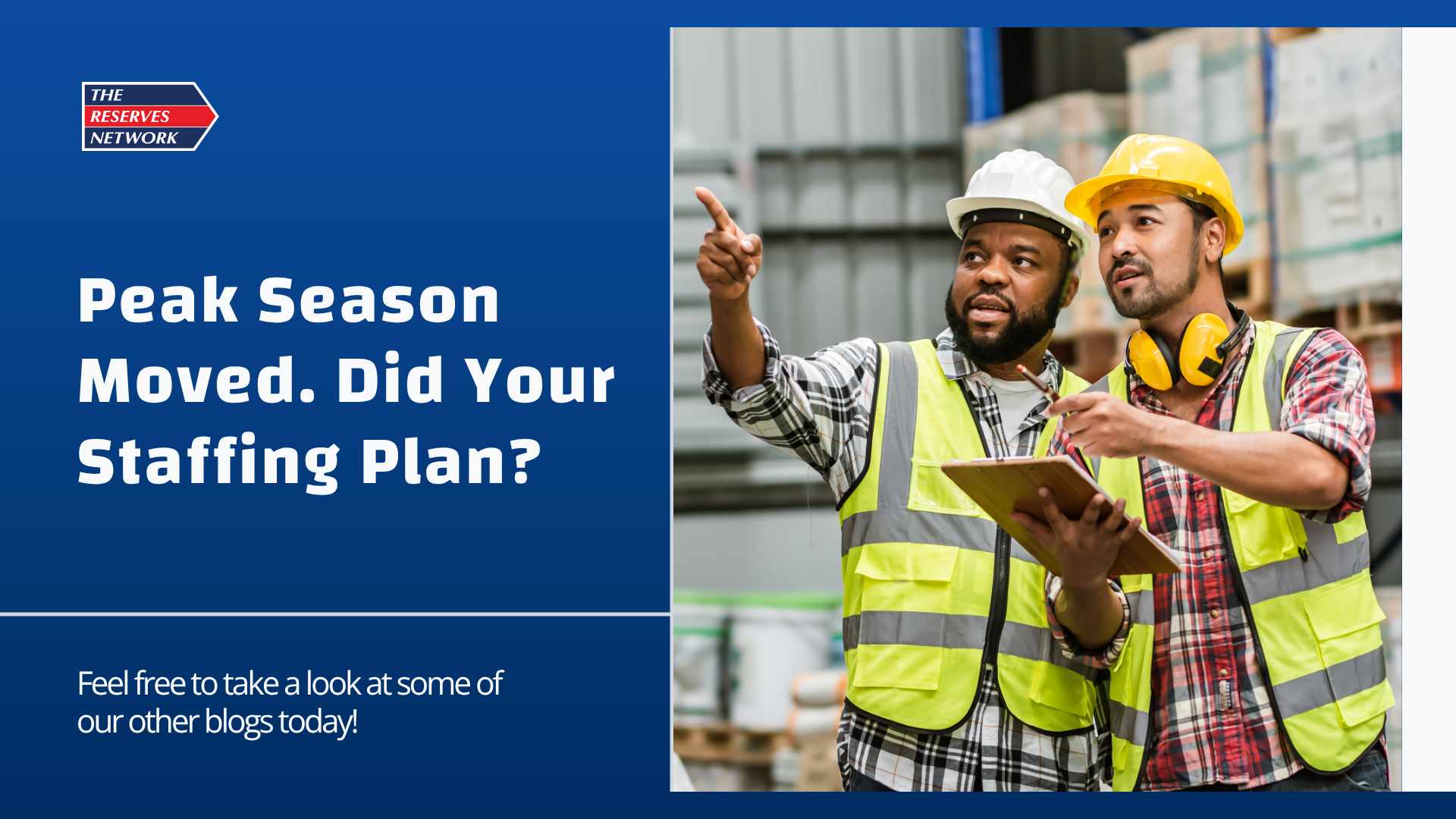
Peak Season Moved. Did Your Staffing Plan?

For years, manufacturers could count on a predictable rhythm: hire in late summer, ramp through fall, wind down after the holidays. That calendar is getting harder to trust.
This year, importers pulled shipments forward in response to tariffs, fuel surcharges, and geopolitical uncertainty, potentially making May the busiest container-import month of 2026. As Capstone Logistics put it, peak season is becoming “less of a fixed period and more of a moving response to disruption.”
Meanwhile, demand for industrial labor is climbing. Year-over-year industrial staffing hours rose 14% in the week ending Aug. 8, and HireQuest reports manufacturing staffing revenue running at approximately three times its pre-pandemic level. If your plan was built around a short holiday window, now is the time to stress-test it.
1. Lock in your flex bench now
Don’t wait for orders to spike before you look for people. Identify the roles you’ll need to scale first and line up pre-screened workers who can start on short notice.
2. Shorten your time-to-start
In a tight market, the best candidates go to whoever moves first. Look at every step between “approved” and “on the floor” and cut what you can.
3. Convert your best seasonal workers
Your strongest temps already know your floor, your safety standards, and your team. A temp-to-perm path turns a seasonal headcount into a long-term retention win.
4. Start Q1 2027 planning before January
Many manufacturers assess next quarter’s needs as the year wraps up. Getting ahead of it now means you’re not competing for the same talent pool as everyone else in the new year.
The bottom line
Staffing partners often spot shifts first. According to HireQuest, staffing firms often see hiring demand weeks or even months earlier than traditional employment reports. TRN can help you read those signals and build a workforce plan that flexes when your demand does.