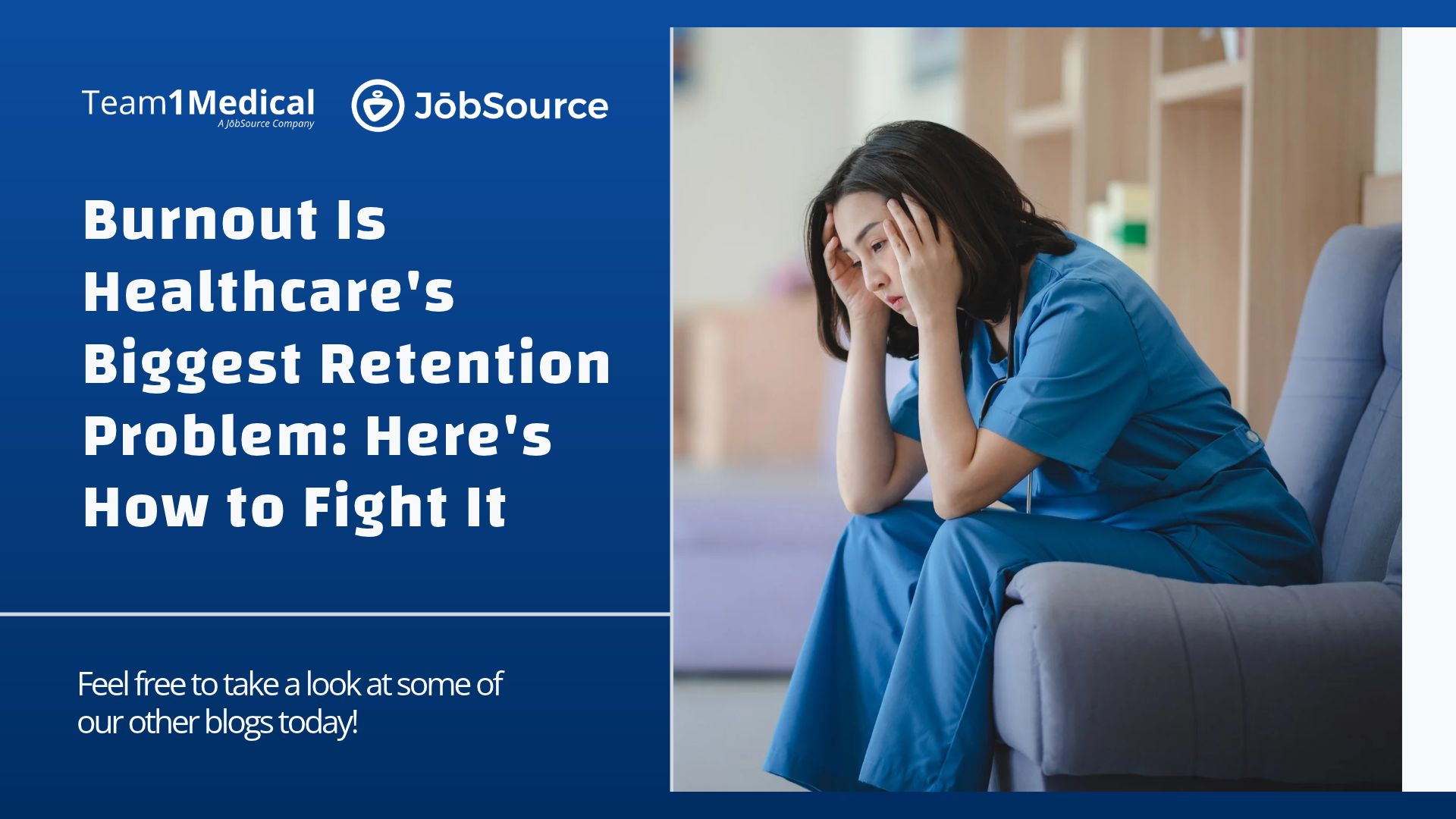
Burnout Is Healthcare’s Biggest Retention Problem: Here’s How to Fight It

Healthcare organizations have spent years trying to hire their way out of the staffing shortage. But the bigger threat may be the people walking out the door.
Burnout isn’t new in healthcare. What’s new is how widespread it has become.
In the 2026 State of Nursing report from Cross Country Healthcare and Florida Atlantic University, nurse burnout climbed from 39% to 67%. Nearly half of nurses (49%) said they feel undervalued.
AMN Healthcare’s 2026 Workforce Outlook Survey found similar numbers beyond nursing, with 51% of allied health professionals reporting high or very high burnout.
And the market isn’t making replacement easy. Healthcare and social assistance had roughly two job openings for every hire in 2026.
When it’s this hard to bring people in, keeping the people you have becomes the strategy.
Burnout Is a Staffing Problem, Not Just a Wellness Problem
It’s tempting to treat burnout as something employees need to manage on their own. More self-care. More resilience training. A wellness app.
But when nurses explain why they leave, staffing comes up again and again. Burnout, inadequate staffing, and stressful work environments are the most common reasons registered nurses give for turnover.
That creates a cycle most healthcare leaders will recognize.
A position opens. The team covers the gap. Shifts run longer. Breaks get skipped. The people carrying the extra load start to burn out.
Then another position opens.
Pay and recognition play a role too. Concerns about pay and benefits more than doubled to 53% among nurses.
The Real Cost Shows Up in Patient Care
In AMN’s survey, 85% of nurses, 75% of allied professionals, and 72% of physicians reported staffing-related care disruptions.
Regulators have noticed. The Joint Commission’s 2026 National Performance Goals for hospitals now make the link official: safe staffing is patient safety.
The business side feels it too. When billing and coding staff turn over, organizations see more claim denials, delayed submissions, and lost knowledge about payer contracts.
Then there’s the risk of losing even more people. 55% of healthcare workers said they planned to search for, interview for, or switch jobs in 2026.
Every one of those departures restarts the cycle.
Five Ways to Protect Your Team Before Burnout Becomes Turnover
1. Stop asking your core team to absorb every gap
Overtime and double shifts can cover an opening for a week. They can’t cover it for months. Bring in flexible support for vacancies, leaves, and seasonal spikes so your permanent staff aren’t carrying the load alone.
2. Make flexibility part of the job, not a perk
Flexibility now ranks high on nurses’ priority lists, with 62% citing it as a factor in career decisions. Self-scheduling, shorter shift options, and predictable schedules can go a long way.
3. Show people where they can grow
Career advancement and continuing education play a surprisingly large role in keeping patient-facing workers in their jobs. Tuition support, certifications, and clear paths into leadership give people a reason to stay.
4. Recognize the work, and mean it
When nearly half your workforce feels undervalued, recognition can’t be an afterthought. Regular check-ins, visible appreciation, and asking frontline staff what they need all send the message that their work matters.
5. Hire with retention in mind
Retention starts before day one. A temp-to-hire approach lets both sides confirm the fit before making a long-term commitment. That means fewer early exits and less disruption for the team.
Successful healthcare organizations regularly ask questions like:
- Which units or departments are relying most on overtime?
- Where have we lost more than one person in the past year?
- Are our administrative and revenue cycle teams stretched as thin as our clinical teams?
- Do we have a plan for coverage before the next vacancy, not after?
Final Thoughts
The healthcare workforce shortage isn’t going away overnight. But organizations can control how much strain they place on the people who stay.
The question isn’t only, “How fast can we fill this role?”
It’s also, “What will it cost us if we lose the people covering it?”
Ready to give your healthcare team the support it needs? Contact TRN to connect with quality healthcare talent today.