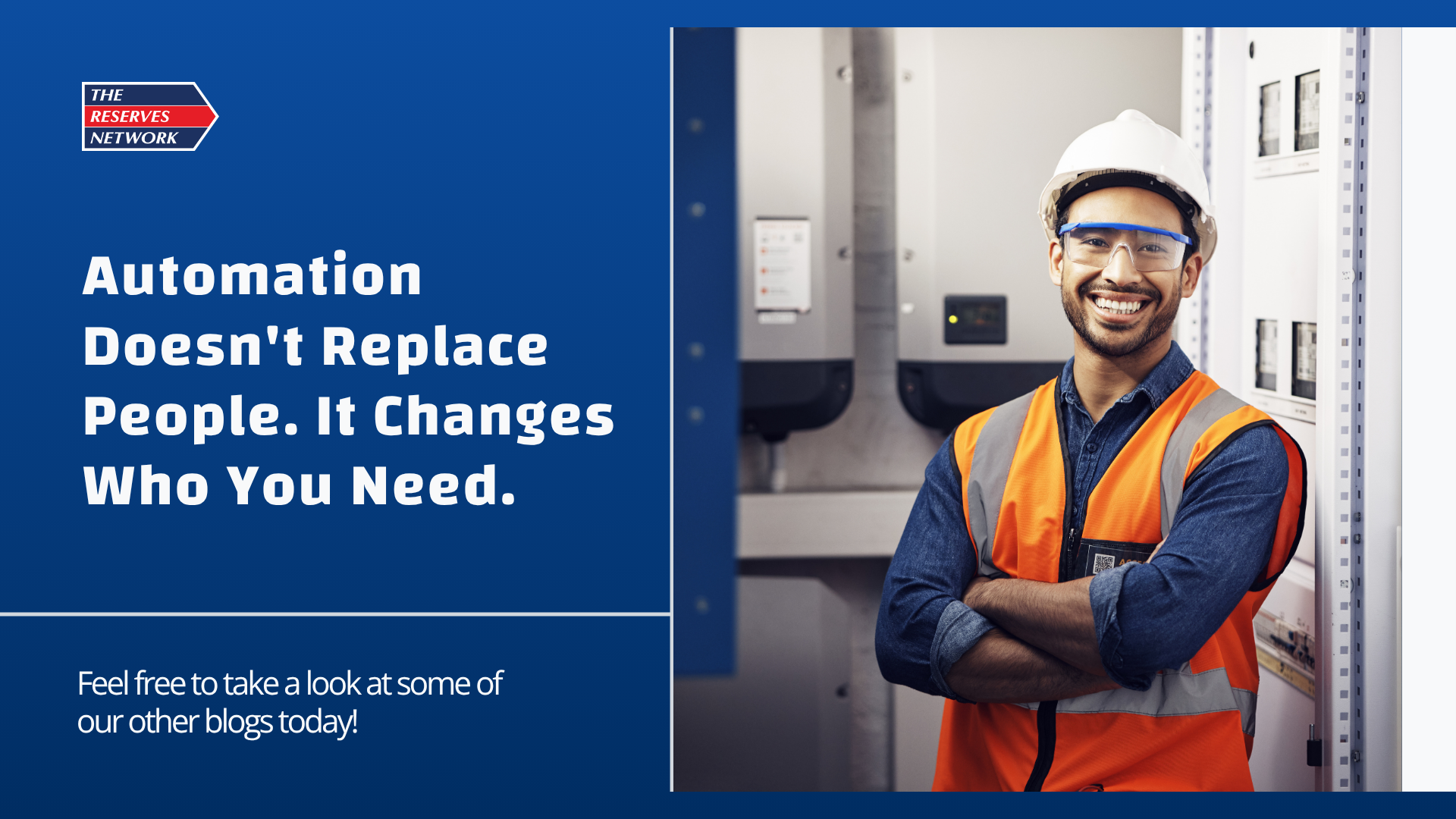
Automation Doesn’t Replace People. It Changes Who You Need.

Sarah Dukes, one of our Executive Search Consultants in Engineering, shared a perspective worth passing along:
The most successful automation projects I’ve seen didn’t reduce the need for people. They changed the type of talent required. The headcount didn’t disappear, it shifted into new roles that demanded a different, and often higher, level of skill.
For years, automation has been viewed as a solution to labor shortages and workforce challenges.
When companies can’t find enough people, the thinking goes, technology can simply fill the gap. In reality, the conversation is far more nuanced. Automation rarely removes the need for talent; it reshapes what that talent needs to know and do.
As equipment, robotics, controls, and technology become more sophisticated, workforce demands evolve right alongside them. The need shifts from simply operating equipment to troubleshooting systems, analyzing data, driving continuous improvement, and leading teams through change. The person who once ran a single machine is now expected to understand how an entire connected system behaves, and how to keep it performing at its best.
The organizations gaining the most value from automation aren’t just investing in technology. They’re investing in the people who can maximize it. They understand that even the most advanced equipment only delivers a return when it’s in the hands of people who can run it, refine it, and push it further.
Automation may reduce certain tasks, but it increases the need for technical expertise, adaptability, problem solving, and leadership. As routine work is handed off to machines, the human contribution becomes more specialized, and more valuable. The result isn’t a smaller role for people; it’s a more demanding one.
The challenge, then, isn’t necessarily finding fewer people. It’s finding the right people, with the skills to support a more advanced operation. That’s a very different search, and it calls for a very different approach to hiring.
Automation is changing the work.
It’s also changing the workforce. The two go hand in hand, and the companies that recognize this are the ones best positioned to succeed.
What changes are you seeing in your organization as automation and technology continue to evolve?
The Reserves Network is here to help you find the skilled talent your advanced operations demand, from troubleshooting and data analysis to continuous improvement and leadership. Let’s talk about the people who will help you get the most out of your investment.