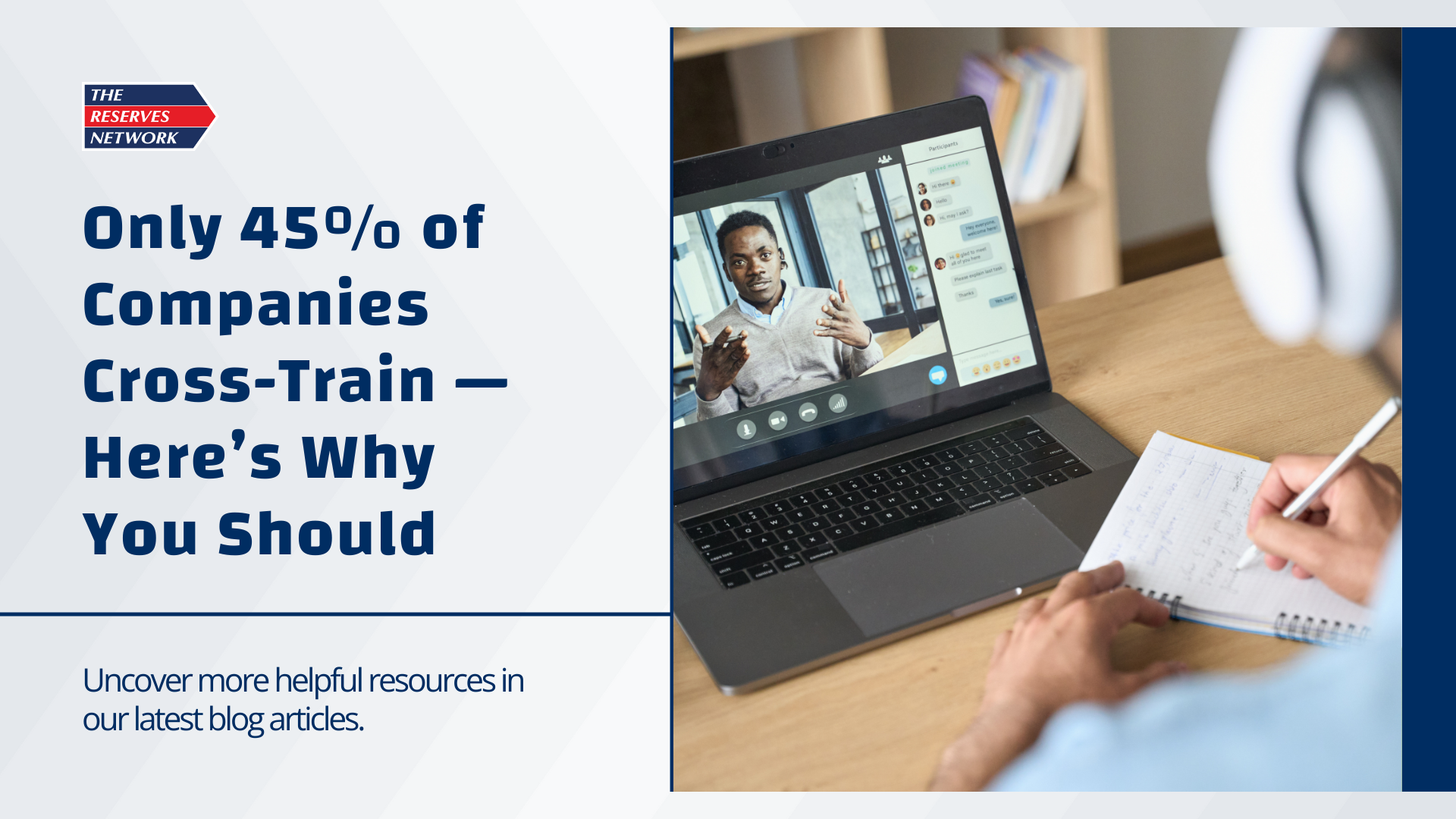
Only 45% of Companies Cross-Train — Here’s Why You Should

When a key team member is out unexpectedly, the ripple effect can slow projects, delay production, and leave the rest of the team scrambling. The companies that recover fastest are the ones with employees who can step in and keep things moving — even if it’s not their usual role. That’s the power of cross-training.
Yet, according to SSR only 45 percent of companies offer cross-training programs. That means more than half of organizations are missing a critical opportunity to build flexibility into their teams.
And it doesn’t have to mean lengthy, in-person sessions that pull employees away from their work. Cross-training can be woven into the workday with flexible, on-demand resources. Tools like Loom allow subject matter experts to record short, targeted videos walking through specific processes or tasks. These recordings can be stored in a central location—like SharePoint, Google Drive, or an internal learning platform—so employees can watch when it’s convenient and revisit as needed. Detailed process guides with screenshots, “day in the life” screen recordings, and even dedicated chat channels for sharing tips all contribute to a culture where knowledge flows freely.
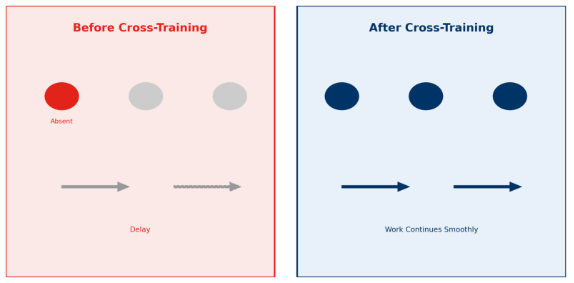
When cross-training is part of the culture, teams don’t just fill gaps when needed — they improve collaboration and increase resilience. In an unpredictable business environment, that kind of adaptability is a competitive advantage worth investing in.
How prepared is your team if a key player is out tomorrow?